
The Fiber–Hormone Connection: How What You Eat Feeds Your Microbiome — and Your Hormones

You probably think of fiber as “that stuff that keeps you regular.” Your grandmother told you to eat it so you don’t get constipated. But what if I told you fiber does far more — especially for women’s bodies? It feeds your gut microbiome, helps regulate your immune system, and even influences hormone levels — including estrogen, progesterone, insulin, and more. In other words: fiber can be a stealthy hormone-ally.

Yet, you’re probably constantly bombarded with confusing advice.
”Feeling bloated or constipated, take PRObiotics!”
”Wait, first you need PREbiotics!”
“Want to boost your gut microbiome, just take a probiotic. Problem solved.”
Except nothing feels solved. You still feel bloated, moody, constipated, or inflamed.
And maybe you’re wondering: What is even the difference between PRO-biotics and PRE-biotics?
Probiotics are the helpful gut bacteria; prebiotics are the specific fibers they eat.
The simple explanation: it’s like running a power plant.
Probiotics (bacteria) = the workers
Prebiotics (fiber) = the fuel
If you have workers but no fuel, the plant shuts down and nothing useful gets made. Fiber (prebiotics) is literally what your gut bacteria ferment to do their job.
When bacteria eat fiber, they produce:
Short-chain fatty acids (SCFAs) that nourish the gut lining and support immunity
Anti-inflammatory metabolites
Enzymes that help process hormones like estrogen
These outputs are key players in gut and metabolic health — no fiber = no fuel = the plant can’t run.
Which is why so many women feel frustrated: they’re taking probiotics, drinking kombucha, eating fermented foods… but the microbiome is starving.
Once you understand this piece, everything else starts to make sense.
Now let’s dive into how fiber, your gut bacteria, and your hormones all mingle — sometimes quite intimately. And yes, there are magic microbes involved.
What happens when you eat fiber — and why your microbes care
When you eat fiber — especially the kinds that resist digestion (like many plant fibers, whole grains, legumes, etc.) — much of it travels intact to your colon. There, your resident gut microbes feast on it. The result of that feast? Short-chain fatty acids (SCFAs) such as butyrate, acetate, and propionate.
These Short Chain Fatty Acids are superstars. They:
Support gut barrier health — helping keep the lining of your intestines intact and strong.
Help regulate immune response & inflammation — SCFAs activate certain receptors (like GPR-41, GPR-43, GPR-109A) and also influence gene expression, reducing inflammatory signals.
Improve metabolic health: better glucose regulation, improved insulin sensitivity, more balanced lipid/glucose metabolism, which are all intimately tied to hormonal balance.
Bottom line: fiber → your microbes → Short Chain Fatty Acids → a friendlier gut, calmer immune system, smoother metabolism. That sets the stage for healthier hormones.
So how much fiber do Women+ need?
For women+, most national guidelines cluster around at least 25–30 g of fiber per day, but many experts consider 30–40 g (from whole foods) a more optimal target for metabolic and gut health. Some researchers and public health groups therefore frame a practical “optimal” range for adults as roughly 30–40 g/day from diverse, mainly minimally processed plant foods, as tolerated by the gut. This is why our Hormonally Supportive Meals recipes and in restaurants range from 10-16 grams of fiber in each meal!
Do I have you all on board with the fiber now? Learn here Why fiber matters for estrogen (and overall hormone) balance
Ranking of High-Fiber Foods
Here is a chart of the highest-fiber foods per 100-gram serving and recommended portion size.
Food | Fiber per 100 grams | Fiber per serving size |
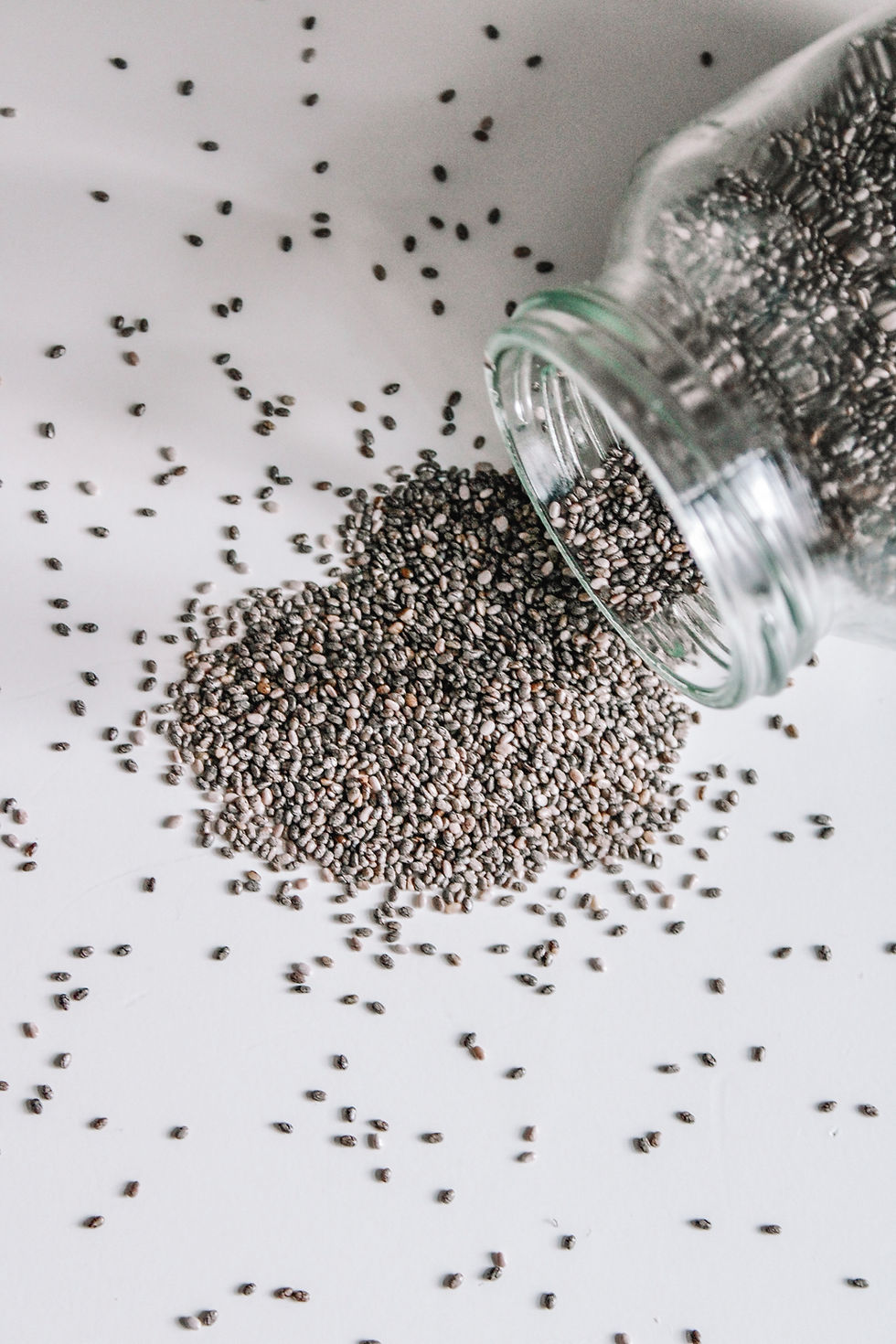
Chia Seeds | 34.4 grams | 8.9 grams per 2 tbsp |
Flaxseed | 27.3 grams | 2.0 grams per 1 ounce |
Popcorn (Air-Popped) | 14.5 grams | 3.5 grams per 3 cups |
Steel-Cut Oats | 12.0 grams | 5.3 grams per 1/4 cup |
Almonds | 10.8 grams | 3.1 grams per 1 ounce |
Navy Beans | 10.5 grams | 19.1 grams per 1 cup |
Rolled Oats | 10.4 grams | 4.2 grams per 1/2 cup |
Whole Wheat Pasta | 9.2 grams | 8.7 grams per 1 cup |
Black Beans | 8.7 grams | 15.0 grams per 1 cup |
Split Peas | 8.3 grams | 16.3 grams per 1 cup |
Lentils | 7.9 grams | 15.6 grams per 1 cup |
Chickpeas | 7.6 grams | 12.5 grams per 1 cup |
Sunflower Seeds | 7.2 grams | 2.0 grams per 1 counce |
Avocado | 6.8 grams | 3.1 grams per 1/3 avocado |
Raspberries | 6.5 grams | 8.0 grams per 1 cup |
Red Kidney Beans | 6.4 grams | 11.3 grams per 1 cup |
Whole Wheat Bread | 6.0 grams | 3.9 grams per 2 slices |
Green Peas | 5.7 grams | 8.3 grams per 1 cup |
Artichokes | 5.7 grams | 4.8 grams per 1/2 cup |
Edamame | 5.2 grams | 8.1 grams per 1 cup |
Pumpkin Seeds | 5.1 grams | 1.4 grams per 1 ounce |
Parsnips | 4.9 grams | 6.5 grams per 1 cup |
Brussel Sprouts | 4.8 grams | 4.2 grams per 1 cup |
Collards | 3.8 grams | 6.5 grams per 1 cup |
Barley | 3.8 grams | 5.97 grams per 1 cup |
Carrots | 3.1 grams | 3.4 grams per 1 cup |
Beets | 3.1 grams | 4.2 grams per 1 cup |
Sweet Potato | 3.0 grams | 3.9 grams per 1 cup |
Quinoa | 2.8 grams | 5.2 grams per 1 cup |
Acorn Squash | 2.6 grams | 5.2 grams per 1 cup |
Pear | 2.6 grams | 4.1 grams per pear |
Cabbage | 2.5 grams | 2.2 grams per 1 cup |
Apple | 2.5 grams | 3.8 grams per apple |
Broccoli | 2.4 grams | 1.8 grams per 1 cup |
Corn | 2.4 grams | 3.5 grams per 1 cup |
Orange | 2.0 grams | 2.8 grams per orange |
Banana | 1.7 grams | 5.3 grams per banana |
Brown Rice | 1.6 grams | 3.2 grams per 1 cup |


Comments